


What is Sodium Salicylate?
Sodium salicylate is the sodium salt of salicylic acid. In its pure form, it appears as a shiny white crystalline powder with a slightly sweet taste and mild aromatic scent, and is readily soluble in water, glycerol, and alcohol.
The high-purity sodium salicylate supplied by Foconsci Chemical is suitable for use across pharmaceutical, personal care, and industrial applications. Due to its excellent water solubility, it can be easily incorporated into aqueous formulations at low concentrations, offering a gentler alternative to free salicylic acid.
Please contact us at info@fscichem.com to request a COA, SDS, or a quotation.
Structural formula:
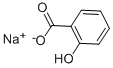
Sodium Salicylate Specification:
| Appearance: | Colorless crystal or crystal powder or crystal slice. |
| Content: | 99.0-101.0% |
| Acidity: | 20ml sample not more than 2.0ml of 0.01M NaOH |
| Sulphate: | ≤600PPm |
| Heavy metal: | ≤20PPm |
| Chloridate: | ≤200PPm |
| Loss on drying: | ≤0.5% |
| Acidity: | Can not exceed 2.0 ml when consuming 0.01MnaOH standard solution |
Sodium Salicylate Uses:
Industrial uses:
1. Organic synthesis raw materials: Sodium salicylate is an important intermediate in many organic synthesis reactions and is widely used in the synthesis of various organic compounds.
2. Preservatives: Due to its antiseptic properties, sodium salicylate is widely used in the field of preservation to protect various products from microbial invasion and extend their service life.
3. Analytical reagents: Sodium salicylate is used as a reagent in chemical analysis to determine the free acid content in gastric juice and the microdrop analysis of uranium dioxide. It is an important tool in analytical chemistry.
Medical uses:
1. Antipyretic analgesics: Sodium salicylate is an antipyretic analgesic, commonly used to relieve fever and pain, and is particularly suitable for the treatment of active rheumatism and rheumatoid arthritis. Its anti-rheumatic effect is significant, bringing patients a comfortable treatment experience.
2. Anti-rheumatic drugs: In the pharmaceutical industry, sodium salicylate is used as an anti-rheumatic drug, which has a good effect on relieving the symptoms of rheumatic diseases.
3. Determination reagent: In the microdrop analysis of free acid and uranium dioxide in gastric juice, sodium salicylate shows excellent accuracy and reliability, providing reliable data support for scientific research and industrial production.
Sodium Salicylate Applications:
Personal Care & Cosmetics: In cosmetic formulations, sodium salicylate functions as a mild preservative and antimicrobial agent, helping to inhibit the growth of bacteria and fungi in products such as shampoos, toners, facial cleansers, and scalp-care products. It also provides gentle keratolytic (exfoliating) action, aiding in the removal of dead skin cells in acne-fighting and anti-dandruff products. Additionally, it serves as a masking agent to neutralize undesirable odors in functional formulations such as deodorants.
Chemical Industry: Sodium salicylate serves as a key intermediate in the manufacture of aspirin, methyl salicylate, and other salicylate derivatives. It is also used as a coupling agent in azo dye synthesis.
Food Industry: Sodium salicylate has been used as a food preservative due to its antimicrobial properties.
Scientific Research: It can be used as a phosphor for the detection of vacuum ultraviolet radiation and electrons.
Product Description:
| Item | Description |
| Chemical name | Sodium salicylate |
| CAS number | 54-21-7 |
| Appearance | White crystalline powder |
| Melting point | >200 °C |
| Boiling point | 336.3 °C (at 760 mmHg) |
| Density | 0.32 g/cm³ (20 °C) |
| Flash point | 144.5 °C |
| Solubility | Readily soluble in water (1000 g/L at 20 °C), glycerol, and alcohol; insoluble in ether, chloroform, and benzene |
| Storage temp. | +15 °C to +30 °C |
Packaging: Cardboard barrel lined with plastic bags, the specification is 25kg/barrel, 25kg/bag. Services can also be provided according to user requirements
Storage conditions: Need to be sealed and stored in a cool, dry place. stored at room temperature. Steady. Flammability. Incompatible with strong oxidizing agents.


